New issue of Language Learning and Technology, October 2021

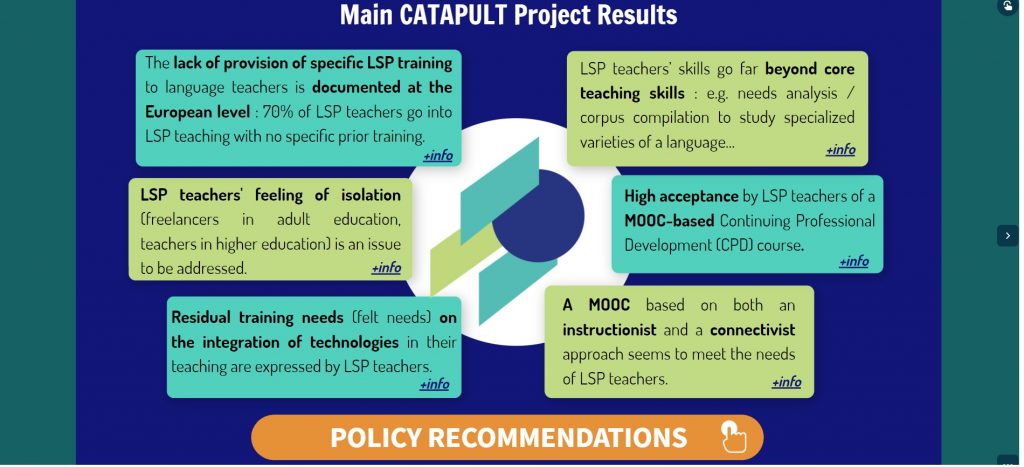
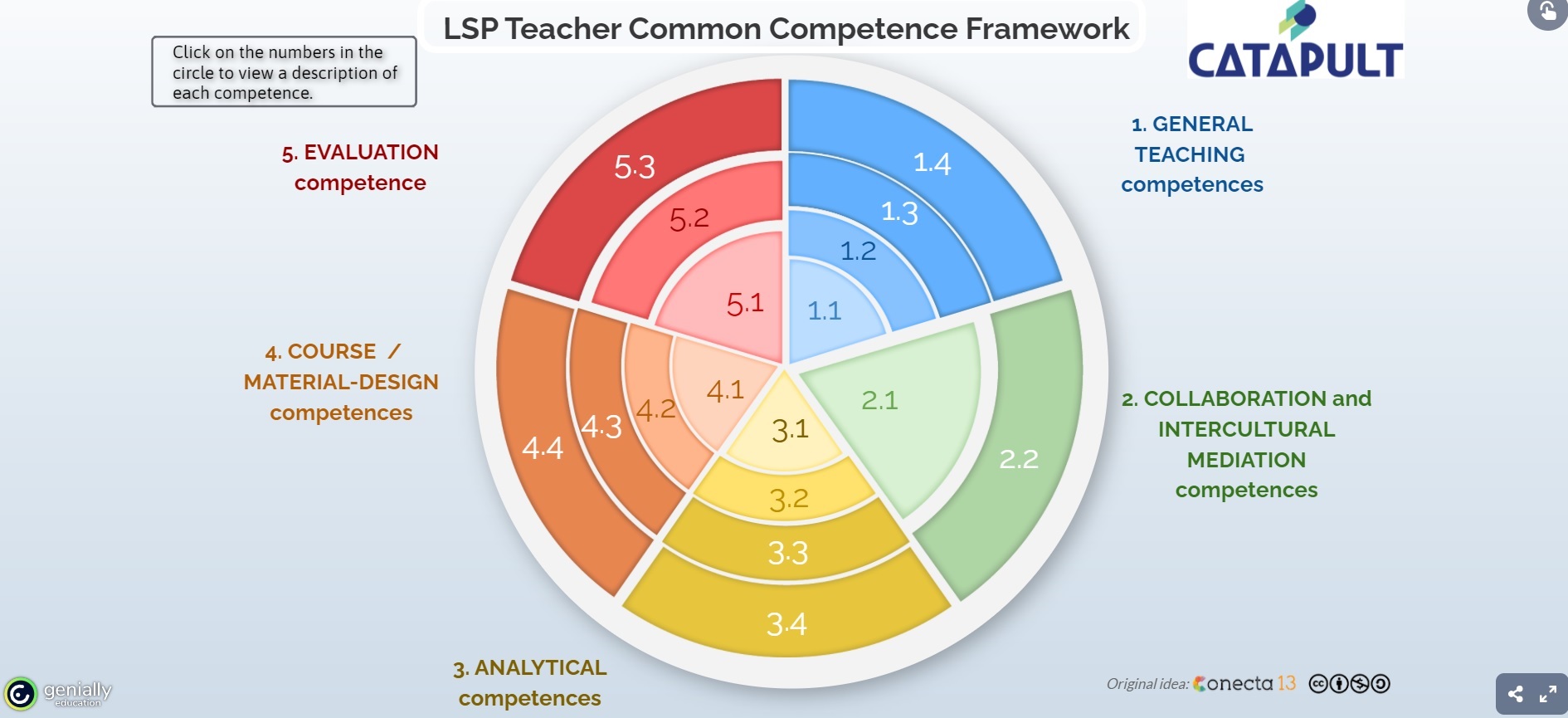
From The latest issue of Language Learning & TechnologyVolume 25 Number 3, October 2021 I would like to highlight 2 contributions that may well be of special interest to those colleagues among us that are into data-driven language learning and/or attended one of the three MOOC editions that the CATAPULT project offered these past 2 years.

They are:

‘Thirty years of data-driven learning: Taking stock and charting new directions over time’ by Alex Boulton, ATILF – CNRS & University of Lorraine and Nina Vyatkina, University of Kansas

Abstract
The tools and techniques of corpus linguistics have many uses in language pedagogy, most directly with language teachers and learners searching and using corpora themselves. This is often associated with work by Tim Johns who used the term Data-Driven Learning (DDL) back in 1990. This paper examines the growing body of empirical research in DDL over three decades (1989-2019), with rigorous trawls
uncovering 489 separate publications, including 117 in internationally ranked journals, all divided into five time periods. Following a brief overview of previous syntheses, the study introduces our collection, outlining the coding procedures and conversion into a corpus of over 2.5 million words. The main part of the analysis focuses on the concluding sections of the papers to see what recommendations and future
avenues of research are proposed in each time period. We use manual coding and semi-automated corpus keyword analysis to explore whether those points are in fact addressed in later publications as an indication of the evolution of the field.
https://www.lltjournal.org/item/3221

and

‘Review of Voyant Tools: See through your text’ by Ella Alhudithi, Iowa State University

Introduction
Voyant Tools is an open-source online-based platform for the analysis of digitally recorded texts developed by two humanities computing professors, Stefan Sinclair and Geoffrey Rockwell. Using computational algorithms, the platform extracts linguistic and statistical information from texts of different sizes, types, and languages within seconds. All extractions are available in visual formats (e.g., grids, graphs, and animations) to offer a window for a macroscopic view of texts. This input-output process allows for turning complex metadata into easily interpretable visuals. The platform is freely accessible today, requiring an internet connection and a text collection (i.e., corpus). Users of varying expertise and technical ability can use it to uncover insights that characterize their texts.
https://www.lltjournal.org/item/3217
 

New Journal about Computer-Assisted Language Learning

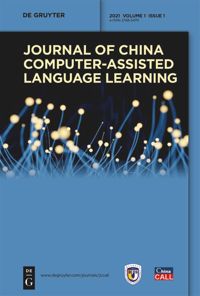
The New (Open Access) Journal of China Computer-Assisted Language Learning published its first issue.
The Journal, an initiative of Beijing Foreign Studies University, is the official journal of ChinaCALL, an affiliate of China Association for Comparative Studies of English and Chinese. The journal seeks to provide an international platform for exchanging ideas, innovations and fi ndings regarding computer-assisted language learning. Research articles and critical reviews are especially welcome in related promising fi elds. The journal is peer-reviewed, published in English, open-access and issued twice a year.

My recommended articles for LinguaCop members include:
Ma, Qing and Mei, Fang. “Review of corpus tools for vocabulary teaching and learning” Journal of China Computer-Assisted Language Learning, vol. 1, no. 1, 2021, pp. 177-190. https://doi.org/10.1515/jccall-2021-2008
and
Shrestha, Prithvi N.. “Designing an online business communication course in English by responding to student needs through an evidence-based approachJournal of China Computer-Assisted Language Learning, vol. 1, no. 1, 2021, pp. 47-79. https://doi.org/10.1515/jccall-2021-2003


CoVe: Centres of Vocational Excellence

Centres of Vocational Excellence (CoVe) is a one of the initiatives in the SKILLS for JOBS EU policy agenda offering funding opportunties that are particularly interesting for colleagues working in VET contexts.

They are intended to be world-class reference points for training in specific areas for both initial training of young people as well as for continuing up-skilling and re-skilling of adults, through flexible and timely offer of training for the skills needs of companies.  https://ec.europa.eu/social/main.jsp?catId=1501

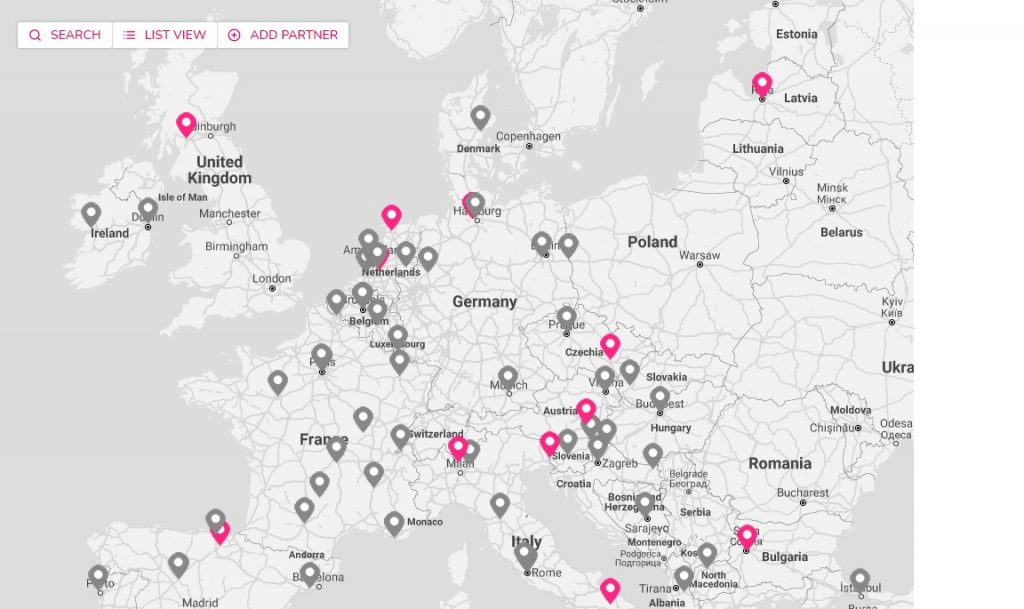
Also check out the KATAPULT site (what’s in a name!) to find out more about on Centres of Vocational Excellence
https://www.wearekatapult.eu/centers-of-vocational-excellence-explained/ and/or to register your organisation if interested in joining a partnership under development: https://www.wearekatapult.eu/cove-match-making-map/


Selection of recent Apps to support practising speaking , vocab development and more…

Passing on a selection of (free) app suggestions by Nick Peachey (May, 2021)  as they are most useful for LSP teachers to create customised materials and promote learner autonomy.
Cappuccino fm
This is a simple free app for creating 6-minute podcasts (beans) to share with friends or through social media. This is a great tool for creating a simple learning chunks for your students or to get them doing spoken homework assignments. There is an app for both iOS and Android.
Ulangi
Ulangi is a mobile app for learning and managing vocabulary. It comes with many useful features for memorizing vocabulary easier, such as Spaced Repetition, Quiz mode and mini games. All features are free for learners. This is a great tool to get students creating their own dictionary. There is an app for both iOS and Android.
Snapstudy
This is a great app to help students develop reading skills comprehension tasks or to revise notes. They simply use the app to take a picture of their text and the app will create questions based on the content of the text. It then creates flashcards so that students can test themselves. Great for developing learner autonomy.
English Tools
This is a collection of tools that you can use to create various kinds of language based worksheets for your students. There are around 25 tools and they include tools to generate word searches, a tool for creating capful close activities, tools for jumbling letter and sentences. Lots of useful and easy to use tools that will save teachers time.
Quizlet Learn
This is a great app for test revision. You add the content you need to pass the exam then you add the date of the exam. The app will then schedule the content review sessions for you to ensure that you pass the exam (if you follow the schedule). A great free app from the people at Quizlet.

‘One Day CATAPULT Workshop in Teaching Languages for Specific Purposes in Adult and Higher Education’.

We would like to invite you to the ‘One Day CATAPULT Workshop in Teaching Languages for Specific Purposes in Adult and Higher Education’.
The event will take place on Saturday, 17th April between 11.00 – 16.30 (CET) by the CATAPULT Project Members. All teachers, teacher trainers, students and all those who are interested in the theme are welcome to join the workshops, webinars and panel discussions.
Programme time: 11.00 – 16.30 (CET)
Date: Saturday, April 17th
For time zone references please click here – you can find your local time conversion on this site.
 
REGISTRATION:
Should you have any problems with your registration, please do not hesitate to send an email to Ozlem Yuges ozlem.yuges@icc-languages.eu
CONTACT DETAILS:
If you have any questions please do get in touch with Myriam Fischer: callus@t-online.de
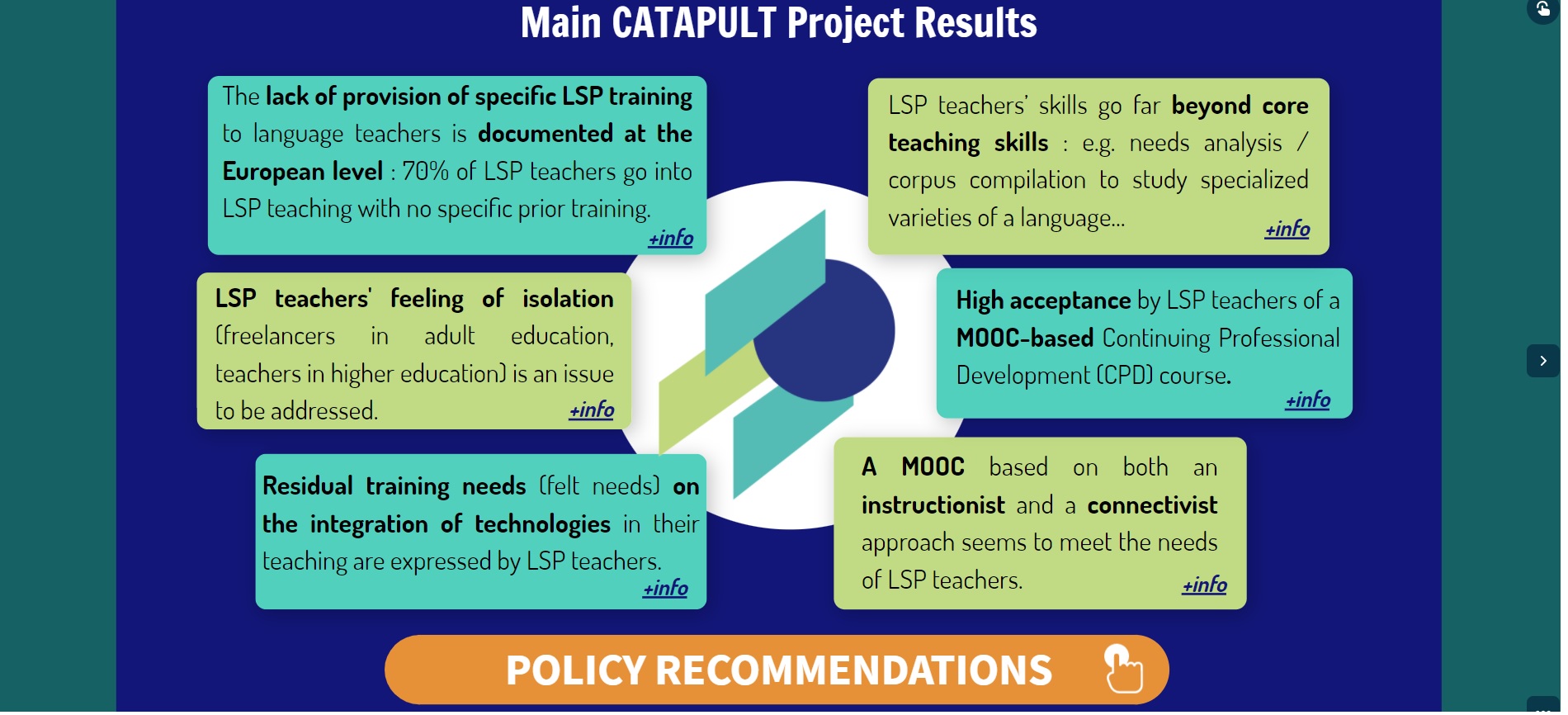
The one-day workshop aims to offer training and tools to language teachers teaching Languages for Specific Purposes (LSPs) in adult and higher education and aims to equip participants with the necessary professional skills to train LSP learners in the digital era.
Best regards, on behalf of:
Myriam Fischer Callus
Language Consultant
EUROLTA Project Manager
Böhmerwaldstr 30
63762 Grossostheim
0172 6175428
06026 995550
ICC, the International Language Association

ICC Home Page: http://www.icc-languages.eu/