Latest publicity campaign leads to registrations increase for the upcoming CATAPULT MOOC

Registrations for the project’s online professional development course on LSP teaching appear to have been boosted by the recently started publicity campaign. Since partners were called upon to help intensify use of social media to promote the upcoming MOOC and membership of its Community of Practice ‘LinguaCoP’,  registrations, particularly for the MOOC, have increased dramatically.

With both platforms available since the beginning of September the 44 registrations since the start of the campaign (28 September) are in sharp contrast with the average of some 7 registrations in the previous two weeks.
 

In addition to posts on communities on Facebook and LinkedIn contributions sent to a number of relevant related projects and organisations, such as the EU Platform EPALE, Mercator European Research Centre and SCILT  were also published through their mailinglists, newsletters or website news sections.


Our Twitter activities were also noticed and retweeted by the EU Erasmus+ organisation.
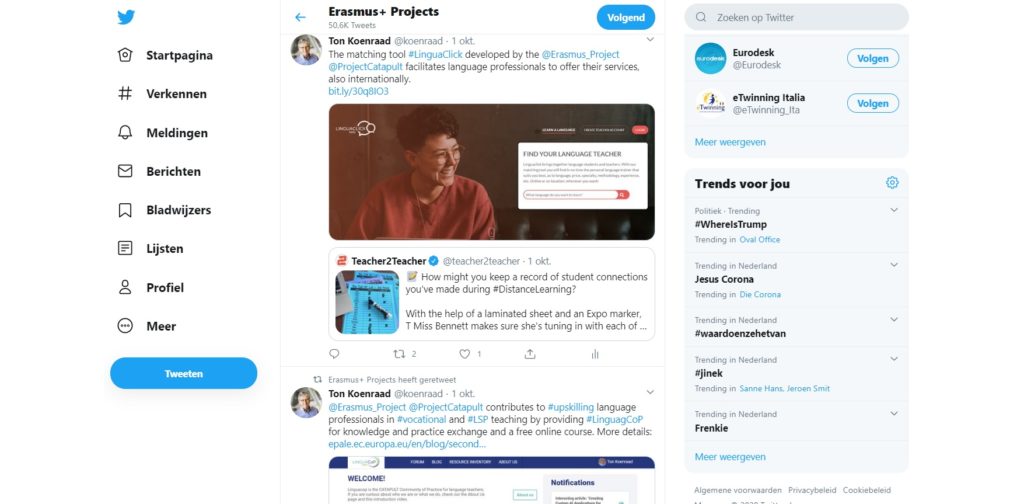
Great to see so many positive reactions, also now and then leading to renewed contact with colleagues known from previous professional communities and activities.
 

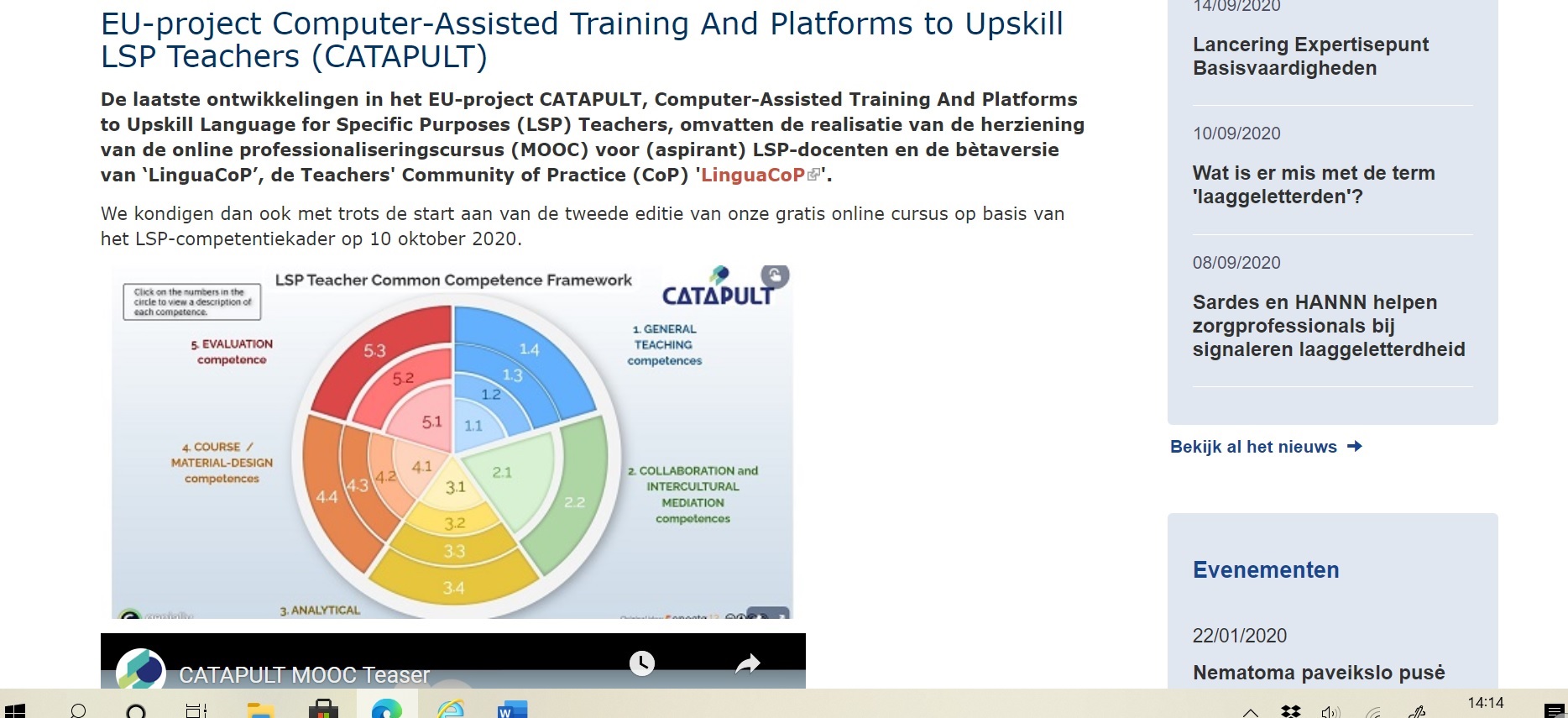
EU Project ‘CATAPULT’ to launch MOOC and Community of Practice platform for LSP teachers

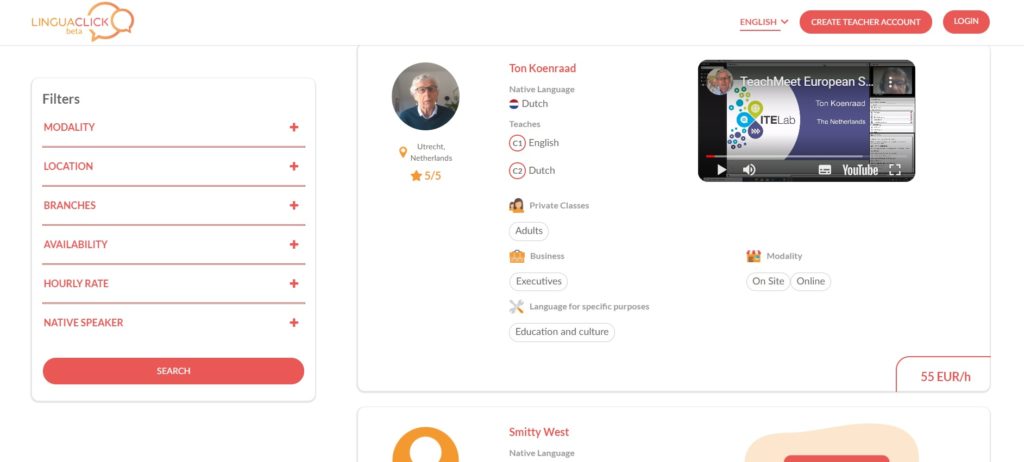
The latest developments in the EU Project ‘CATAPULT’ – Computer-Assisted Training And Platforms to Upskill Language for Specific Purposes (LSP) Teachers include the realisation of the beta version of the project’s Teachers’ Community of Practice (CoP) ‘LinguaCoP’. This platform supports LSP teachers to find & share resources and tips and with its matching tool ‘LinguaClick’ facilitates professionals to offer their services, also internationally.
View this short presentation video to see what this online CoP has in store for you and become a member for free.

Furthermore we gladly announce the start of the second (revised) edition of the free online course (MOOC) based on the LSP competence framework on October 10, 2020. Watch this video to get a sneak peek at what course participants can expect. Those interested can already register here:
https://www.thecn.com/course/1169867/page

For more details about these and other project developments see the online version of the latest Newsletter.

Project website: http://catapult-project.eu Twitter: @ProjectCatapult
Ton Koenraad on behalf of Catapult partner TELLConsult

EUROCALL 2020 online confererence

The theme of the EUROCALL 2020 conference is: CALL for Widening Participation. 
It is organised by the Centre for Internationalisation and Parallel Language Use (CIP) in Copenhagen and was planned to take place on South Campus from 19 to 22 Aug 2020.
Because of the Corona measures, this year’s conference cannot take place in the usual way. Alternatively, the Eurocall gathering, an online program of workshops and SIG symposia, will be organized during the originally planned days. For more details (program, registration, costs etc.), please get connected ready for our #eurocallgathering event https://eurocallvirtual.blogspot.com/2020/08/eurocallgathering-connecting-in.html


First expert meeting of ECML project “CEFR Companion Volume Implementation Toolbox”

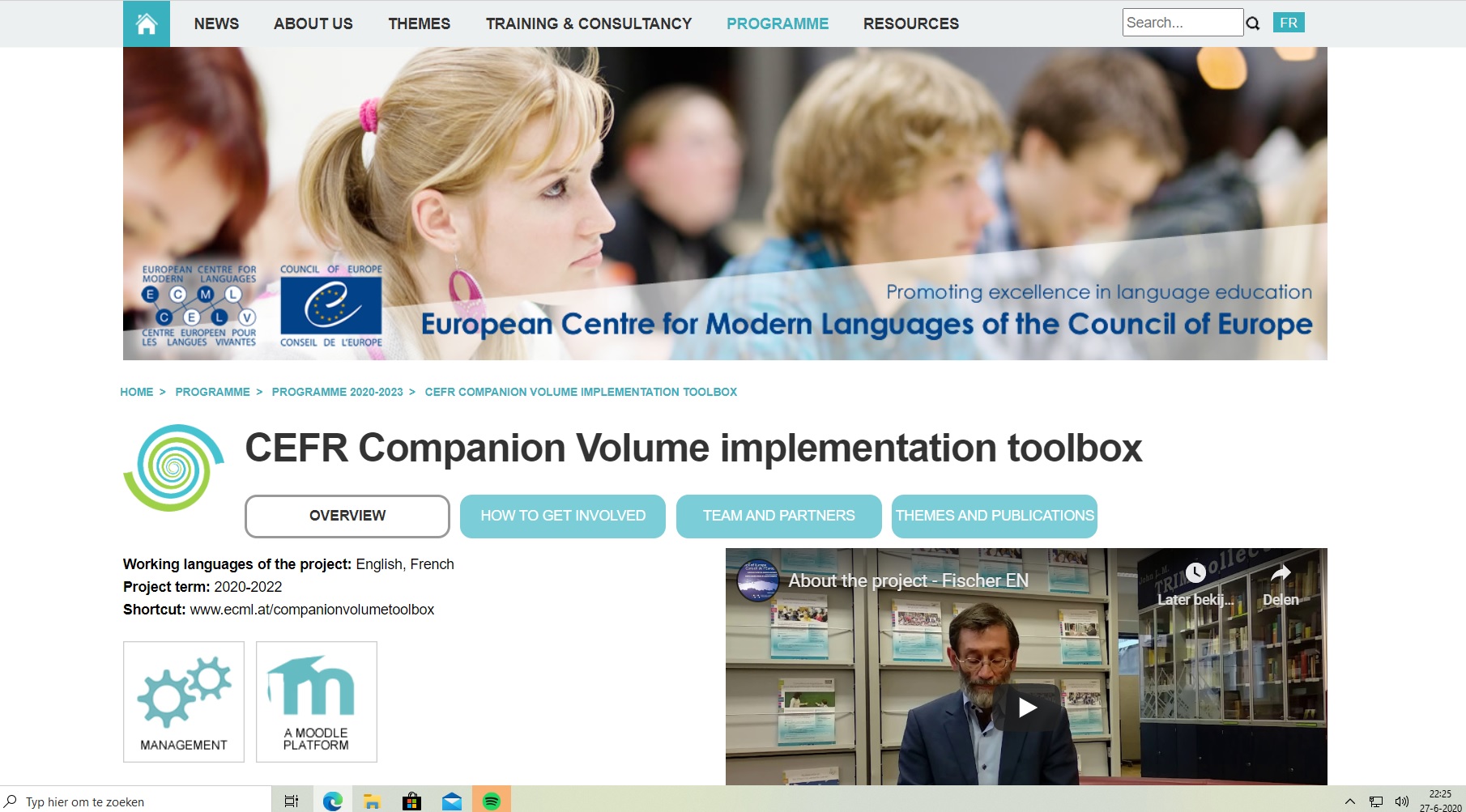
Passing on the latest (June 24, 2020)news published by the ECML project “CEFR Companion Volume Implementation Toolbox” – or “the VITbox Project” for short – which has now started its activities. The project aims to provide digital resources that exemplify how to implement the ideas of the new CEFR Companion Volume in language teaching at university and in vocational training. These resources will include short videos, checklists, texts and classroom tasks and for use by teacher educators and teacher trainers in their training sessions and by language teachers for self-study purposes. The material will be produced in English and French but will include examples from other languages. The idea behind the VITbox project is to create an open toolbox from which educators, trainers and teachers can freely choose the resources they consider suitable for their purposes, adapt them to their individual training needs and eventually create their own material.

The team is now looking forward to setting up a substantial database of varied materials, that has been piloted in their own training sessions and freely available to the public.

Johann Fischer, Laurent Rouveyrol, Barbara Sawicka, Julia Zabala Delgado

  • VITbox project website: English – French
  • ECML programme of activities 2020-2023 “Inspiring innovation in language education: changing contexts, evolving competences”: English – French

New ECML resource website: CEFR-QualiMatrix – A quality assurance matrix for CEFR use

The European Centre for Modern Languages (ECML) of the Council of Europe is pleased to announce the completion in both English and French of its CEFR-QualiMatrix resource website “A quality assurance matrix for CEFR use” (www.ecml.at/CEFRqualitymatrix), an output of the ECML programme “Languages at the heart of learning” (2016-2019).

The CEFR-QualiMatrix supports teachers and other language education professionals in engaging in curriculum renewal supported by the CEFR action-oriented approach vision of teaching and learning.

Alongside the matrix tool, the website provides a rich collection of resources and promising practices that can be used by different stakeholders at the levels of policy, curriculum development, teaching and assessment.

Find a flyer about CEFR-QualiMatrix project int the Catapult resource library here:

Flyer about the Quality Assurance Matrix for CEFR use project


British Council offers new support service

In the context of the Corona crisis the British Council is running a series of free online events (Education exchange digital events) that bring together education practitioners from around the world to develop ideas, share great practice and inspire each other to find solutions to shared challenges over the coming weeks.

First session entitled ‘The challenges of remote learning through online classrooms and resource hubs was particularly topical and had contributions from a range of countries including Moldavia, Croatia, Morocco and Tunisia.